
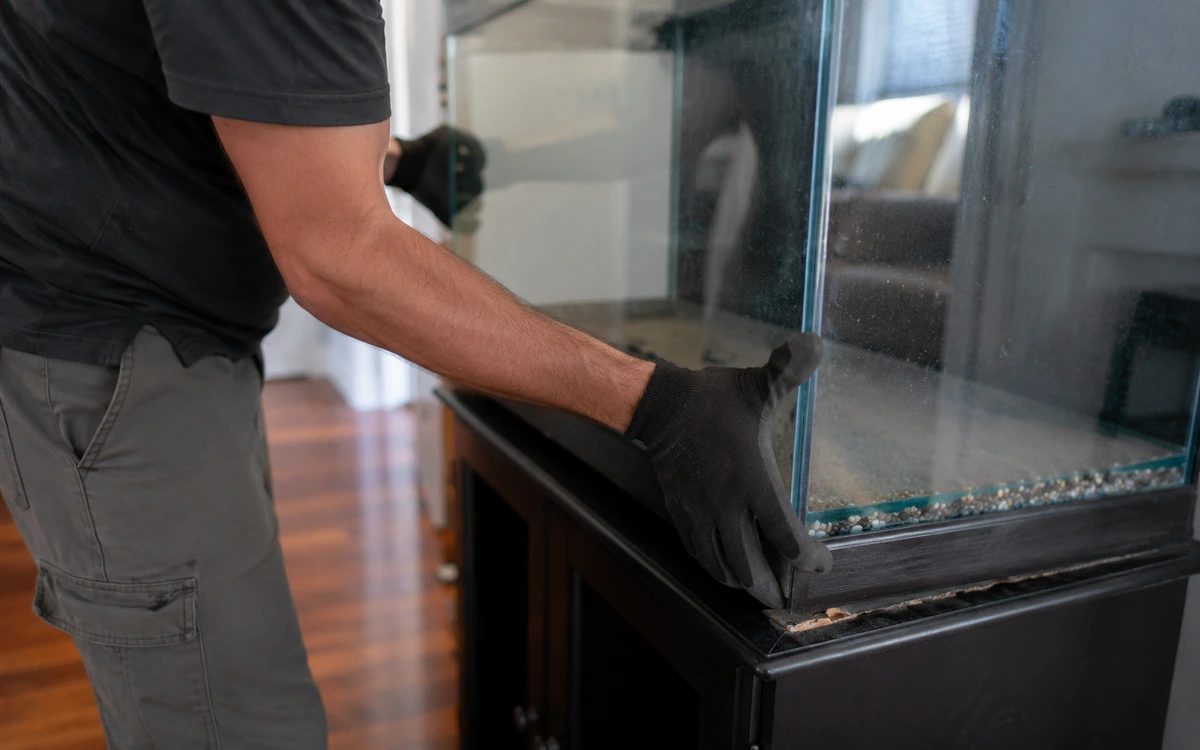
We provide professional aquarium relocation services in New Bedford, MA for damaged tanks, stressed aquatic environments, and risky moves that can crack glass, disrupt filtration systems, or harm fish during transport. Careful draining, disassembly, transport, and reassembly are performed to safely move tanks, preserve water balance, and reestablish stable aquatic conditions that protect livestock and prevent system failure. Request a quote today.
Why Does Aquarium Relocation Cause Stress to Fish?
Aquarium relocation causes stress because it disrupts water chemistry, temperature stability, and established biological balance. Fish are highly sensitive to sudden changes in ammonia levels and oxygen availability during transport. Even short moves can trigger stress responses like reduced appetite or erratic swimming.
How Do Harbor Winds and Older Coastal Housing in New Bedford Affect Aquarium Relocation?
In New Bedford, strong harbor winds and aging coastal housing stock can make aquarium relocation sensitive to both weather and interior access. Neighborhoods near the waterfront, downtown fishing districts, and residential streets along the coast often involve tight entryways and variable salt-air conditions. Proper relocation helps protect tanks from vibration and humidity shifts during short coastal moves.
Can You Move a Fish Tank With Water Still Inside It?
You should not move a fish tank with a significant amount of water still inside. The weight shift puts uneven pressure on the seams and glass, which can cause structural failure or cracking. Tanks are designed to be transported empty or nearly empty for safety.
How Long Can Fish Safely Stay in Transport Bags During Relocation?
Fish can typically stay in transport bags for several hours if oxygen levels and temperature are properly controlled. Extended time increases carbon dioxide buildup and reduces oxygen availability, which can stress or harm sensitive species. Professional movers often aim to minimize transit duration for this reason.
What Causes Aquarium Leaks After a Tank Is Moved?
Aquarium leaks after relocation are usually caused by weakened silicone seals or micro-fractures in the glass from shifting pressure. Even slight twisting of the frame during transport can break the original seal integrity. These failures often appear hours or days after setup once water pressure stabilizes.
How Do Glass and Acrylic Aquariums Differ During Relocation?
Glass aquariums are more rigid but prone to cracking under impact or torsional stress during movement. Acrylic tanks are lighter and more impact-resistant but can flex and scratch more easily when handled improperly. Each material requires different handling to avoid structural damage.
When Should an Aquarium Be Re-cycled After Relocation?
An aquarium should be re-cycled immediately after relocation if a significant portion of the biological media or water is replaced. The beneficial bacteria balance is often disrupted during transport, causing ammonia and nitrite spikes. Re-establishing the cycle helps restore a stable environment for fish survival.
How Much Does Aquarium Relocation Cost in New Bedford, MA?
Aquarium relocation costs in New Bedford, MA typically range between $247 and $2,006, with estimated pricing depending on tank size, total gallons, distance of the move, and whether the aquarium requires full breakdown, transport, and reassembly or can be moved intact. Pricing can also vary based on livestock sensitivity, water disposal and reset requirements, access constraints at both locations, and the need for specialized equipment such as lifting straps, dollies, or reinforced transport support.